
Scholars, researchers, and practitioners from leading national and international institutions gathered at the Faculty of Humanities, Universitas Indonesia, to explore how space, ritual, and economic life intersect in shaping contemporary societies through interdisciplinary dialogue and spatial ethnography.
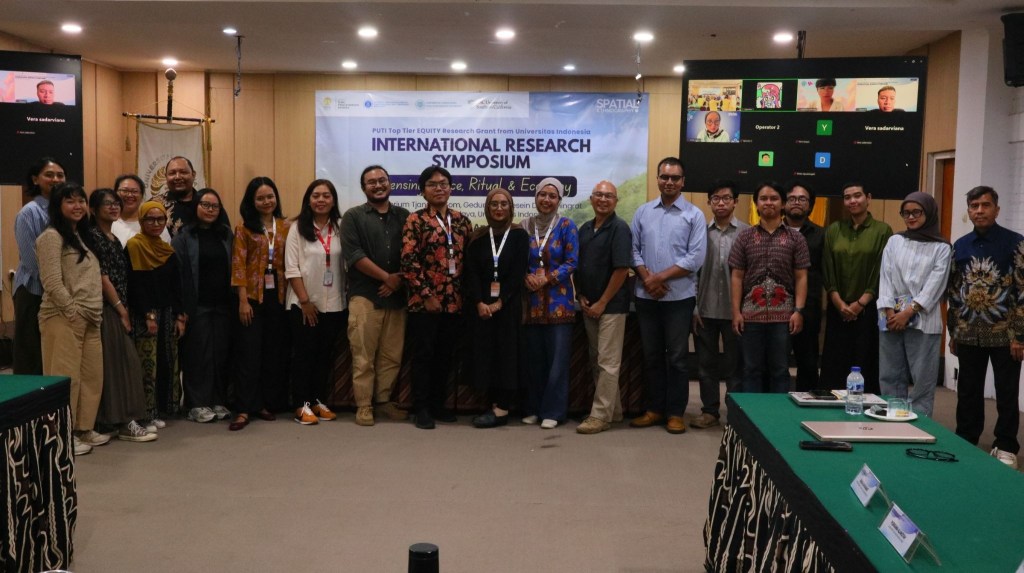
Depok, 27 April 2026 — The first day of the International Research Symposium 2026 titled Sensing Space, Ritual, & Economy was successfully held at Auditorium Tjan Tjoe Som, Gedung IV Hoesein Djajadiningrat, Faculty of Humanities, Universitas Indonesia. The symposium is part of the PUTI Top Tier EQUITY research grant project, “Luxury Tourism on a Hungry Island: Sumba Economic Transformations and their Impact on Food Sovereignty and Migration,” and serves as an international academic platform for interdisciplinary dialogue on the intersections of space, ritual, and economic life.
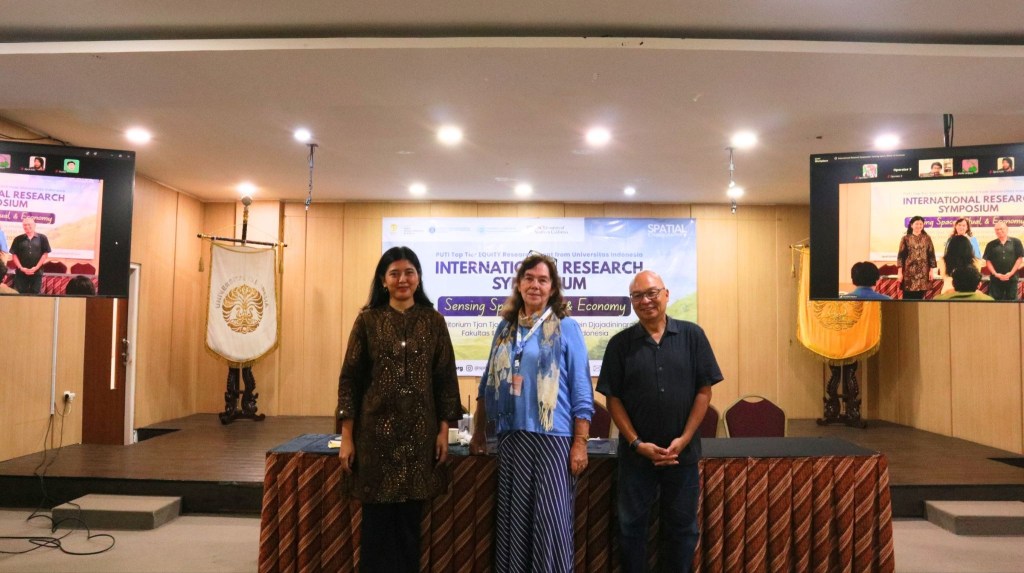
The event brought together academics, researchers, students, and practitioners from various national and international institutions, including University of Southern California, University of Leeds, Cornell University, Institut Teknologi Bandung, Universitas Gadjah Mada, and KITLV Leiden, reflecting the growing collaboration between Indonesian and global academic institutions.
The symposium opened with remarks from Dr. Abellia Anggi Wardani, S.Hum., M.A., as Conference Chair and Principal Investigator of Spatial Ethnography, who emphasized that the symposium has become a platform for interdisciplinary collaboration, bringing together remarkable participants and scholars from various universities to exchange perspectives and deepen discussions on space, ritual, and economy. She also highlighted the importance of understanding how space is shaped, sensed, and contested through ritual practices and economic processes in contemporary society.
This was followed by remarks from Dr. Rouli Esther, M.Si., M.A., Vice Dean for Education, Research, and Student Affairs of the Faculty of Humanities, Universitas Indonesia, representing the Dean, Dr. Untung Yuwono, who highlighted that the symposium was not merely an academic event, but “a shared intellectual journey” that invites participants to rethink the relationships between space, ritual, and economy. She further stated that “today’s symposium is a continuation of important conversations that have already begun, and today, we take them further… not only as a venue for presenting research, but as a meeting point of disciplines, of experiences, and of ideas that may not always agree, but will certainly enrich one another.”
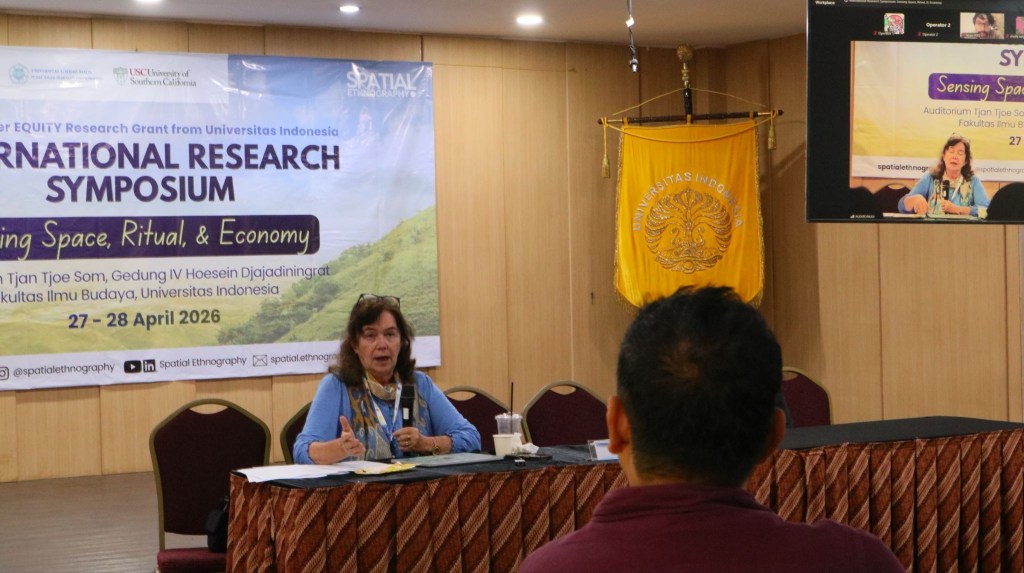
The keynote session featured Prof. Janet Hoskins from the University of Southern California that offered critical insights into the complex relationship between ritual, food insecurity, tourism, and social transformation in Sumba. Drawing from her anthropological research, Prof. Hoskins explored how hunger and scarcity are often closely tied to social obligations and prestige feasting practices, where communities navigate the tension between maintaining ancestral traditions and meeting everyday economic needs. She further examined how the rise of tourism and new sources of income have transformed local perceptions of tradition, leading to a revaluation of cultural practices that were once seen primarily through ritual and communal obligations. Her discussion also addressed Marapu, the indigenous belief system in Sumba, highlighting how misrecognition and the politics of religious categorization continue to shape social and institutional experiences for local communities.
Prof. Hoskins emphasized the need to move beyond simplistic narratives that blame cultural traditions for poverty and food insecurity. Instead, she argued for a broader understanding of life sovereignty and social dignity, stressing that structural inequalities, historical marginalization, and unequal development play a far greater role than ritual practices alone. Her keynote concluded with a powerful reminder reflected in the title itself: rather than blaming ancestors, greater attention should be given to contemporary systems of inequality and recognition. She further noted that “the intensification of prestige feasting is often misrecognized as a ‘Marapu economy,’” clarifying that Marapu in Sumba is fundamentally a form of cultural identity rather than an economic system. According to her research, it is precisely modern forces, particularly the pressures of a cash-based and salaried economy, that are driving the inflation and escalation of feasting practices. Her keynote called for a critical rethinking of how tradition is interpreted, reminding participants that rather than blaming ancestors, greater attention should be given to contemporary systems of inequality and recognition.
The discussion was moderated by Prof. Manneke Budiman from the Department of Literature, Universitas Indonesia, encourages engaging academic exchange among participants.
Day 1 continued with three panel sessions. Panel 1, Spatial Practices and Everyday Life, explored issues ranging from tidal inundation risk assessment in Eretan, liminal infrastructure landscapes in Yogyakarta, domestic spatial contestation in Indonesia, to colonial plantation ruins in Banda Islands. Panel 2, Ritual and Embodied Practices, examined soundscape disruption among Orang Rimba, ritual management of lontar trees in Sabu Raijua, archival care as memory infrastructure in Lasem, and smellscape experiences surrounding TPA Suwung. Panel 3, Sacred Spaces and Religious Transformations, discussed women’s embodied ritual knowledge in Bali, ritual performance traditions in West Aceh, socio-spatial adaptation in the sinking village of Timbulsloko, customary social spaces in Tanimbar, and women’s ritual knowledge in Kasepuhan Anyar. Each panel was followed by dynamic discussion sessions, allowing participants to deepen interdisciplinary engagement and exchange perspectives.
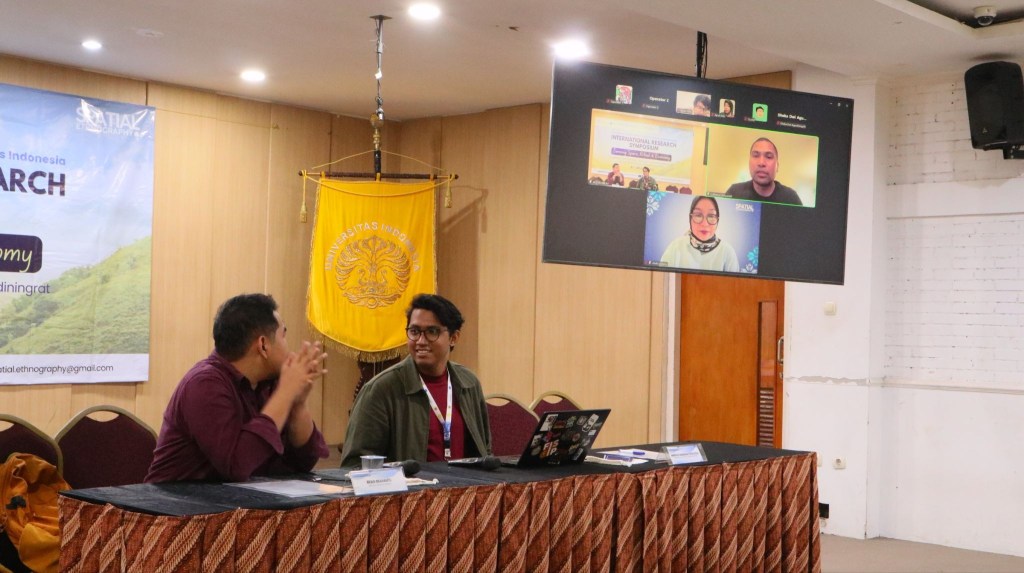
Concluding the first panel session, the discussant, Zulfirman, a doctoral candidate from Cornell University, emphasized that the various models and conceptions of space discussed by the presenters should not be detached from the realities of how communities actually live and inhabit those spaces. He noted that these spatial approaches must be implemented through stronger social perspectives and grounded methodologies. He also highlighted that a shared responsibility for academics today is to recognize the urgency of decolonizing research methodologies, encouraging scholars to become more critical in understanding spatial development and social transformation. As he stated, “the conception of space should not be separated from how people live within it,” making the decolonization of methodology an important collective task for future research.
Another important discussion emerged from the second panel session through the presentation by Daniel Hariman Jacob from Universitas Indonesia on the ritual management of lontar trees in Sabu Raijua. He highlighted how local communities continue to organize their daily lives around seasonal cycles, where certain months are specifically designated for cooking and processing lontar sap, making productive activities possible only during limited periods of time. The livelihoods of lontar tappers and fishermen are also closely tied to customary restrictions and taboos, including prohibitions against harming tree trunks or using certain wood for house construction.
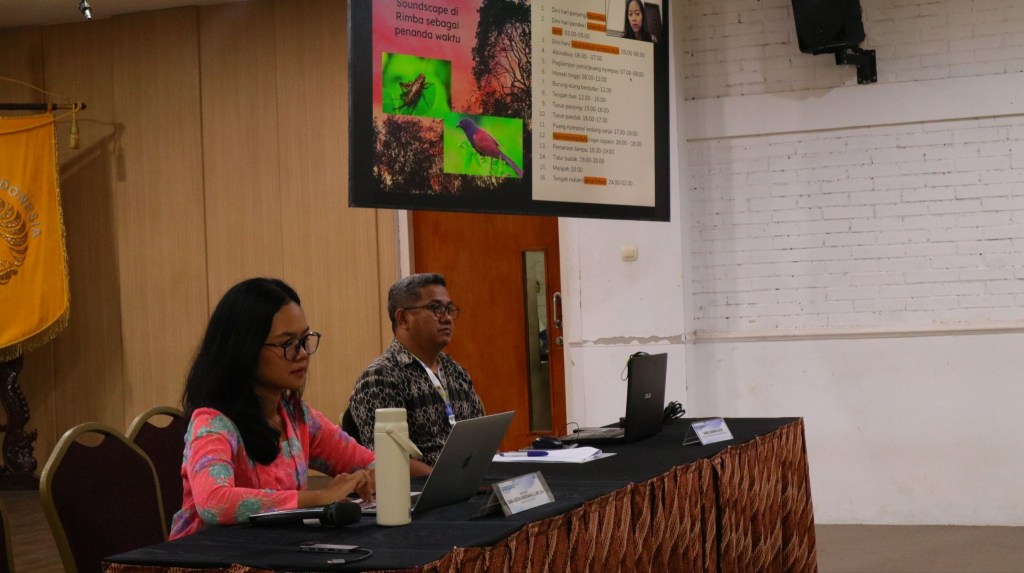
He explained that these restrictions are rooted in local myths and ancestral beliefs, where ritual practices shape how people interact with nature and maintain social balance. However, he also showed that these traditions are not entirely rigid. Over time, rituals and prohibitions have become more flexible and adaptive, allowing communities to negotiate between preserving ancestral values and responding to modern social and economic demands.
Daniel emphasized that rather than simply rejecting or fully preserving tradition, people continuously negotiate which values and restrictions can still be maintained and which must evolve. This reflects how communities in Sabu today are learning to respect cultural heritage while adapting to contemporary realities, showing that tradition and modernity are not always in opposition, but often exist in constant dialogue.
The first day concluded with closing remarks and documentation, marking a productive beginning for the two-day symposium. Through empirical research and lived experiences shared by presenters, the symposium continues to foster critical conversations on ethnography, spatial studies, cultural transformation, and development studies.
Wrapping the third panel session, the discussant, Dr. Wengki Ariando, emphasized that the discussions throughout the session reflected a shared curiosity about how spatial ethnography helps shape our understanding of sacred spaces, religious transformation, and everyday lived experiences. He highlighted that spatial ethnography allows researchers to move beyond simply observing places as physical settings, but also to understand how meaning, memory, and social relations are continuously produced within them. Reflecting on the diverse presentations, he noted that the session encouraged participants to think more critically about how space is experienced, negotiated, and transformed, particularly in relation to ritual practices and community life. Through this perspective, spatial ethnography becomes an important approach for understanding the deeper social realities embedded within place.

The second day of the symposium will continue on 28 April 2026 with discussions on Culture, Economy, and Local Livelihoods; Mobility, Migration, and Translocal Spaces; and Representation and Narrative in Space.
Written by: Charyssa Aisya Paramesti – Media Intern Spatial Ethnography


Leave a Reply