
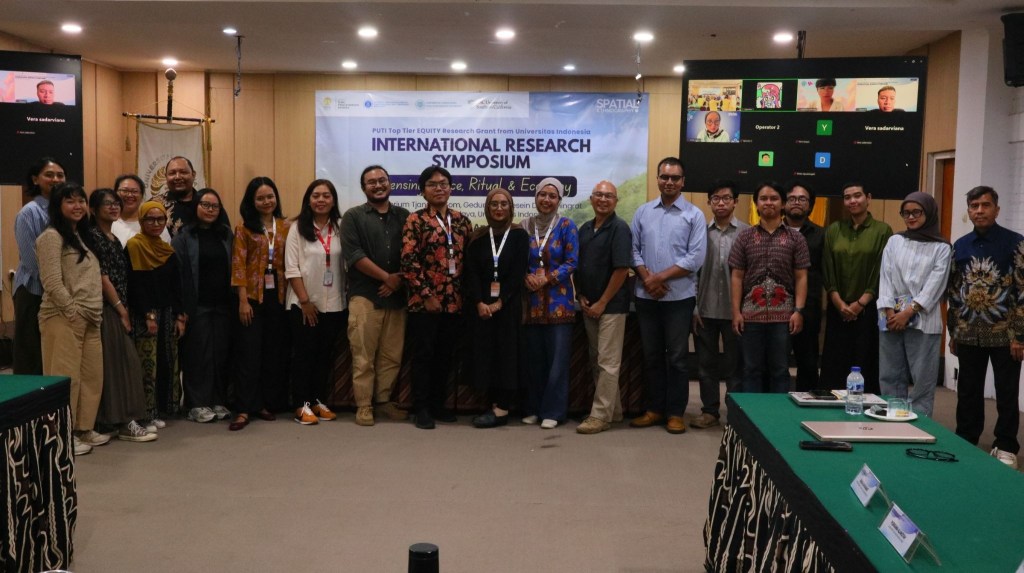
The final day of the symposium at the Faculty of Humanities, Universitas Indonesia, challenged traditional cartography and state narratives, highlighting the “spatial agency” of marginalized communities and the sensory rhythms of everyday resistance.
Depok, 28 April 2026 — Following the successful exploration of ritual and economic transformation on its opening day, the International Research Symposium 2026, Sensing Space, Ritual, & Economy, concluded its second day at the Faculty of Humanities, Universitas Indonesia. The final sessions of this PUTI Top Tier EQUITY research project deepened the interdisciplinary dialogue, moving beyond physical boundaries to examine how space is lived, sensed, and reclaimed by those at the margins of global and state narratives.
The morning commenced with Panel 4: Culture, Economy, and Local Livelihoods, where discussions centered on the tension between institutional designations and communal life. Bagus F. Apriadi offered a critical look at Borobudur, arguing that it should be understood as a “lived landscape” rather than just a “protected heritage site,” as local communities must constantly negotiate their own rhythms against the overwhelming seasonal cycles of tourism. This was followed by I Made Teja Permana, who explored the Sound Horeg phenomenon in East Java. He framed this “extreme bass” technoculture as a powerful spatial claim by the working class, who use sensory aesthetics to occupy and redefine the urban environment.
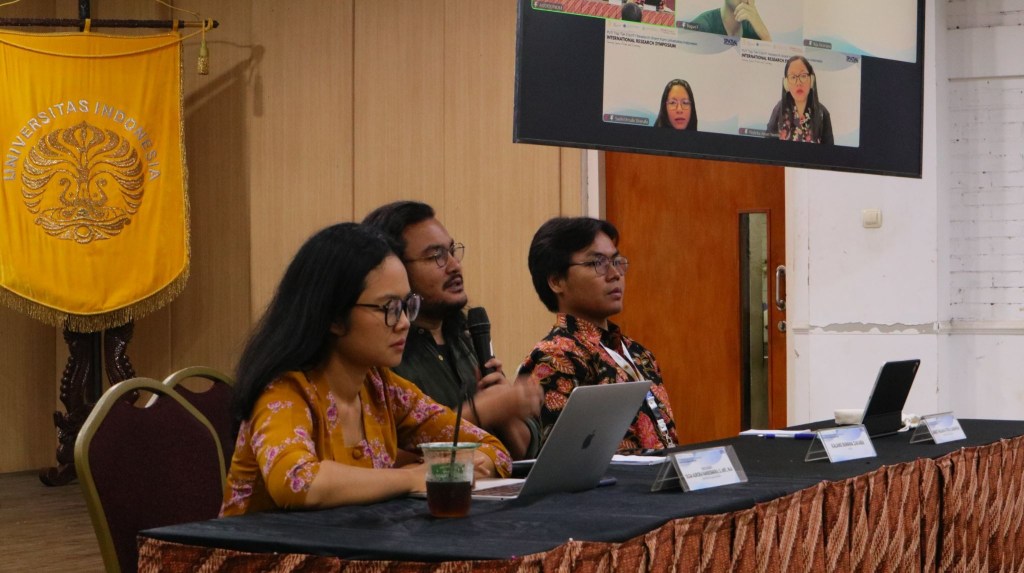
The afternoon sessions in Panel 5: Mobility, Migration, and Translocal Spaces shifted the focus toward the “agency” found in movement and invisibility. Langit Masaha Putra Sabawana presented a compelling case on the Karen ethnic group along the Myanmar-Thailand border, detailing how they transform forest terrains into autonomous “safe spaces” to maintain cultural sovereignty amidst conflict. Complementing this, Purnama Alamsyah introduced the concept of “quiet urbanism” in Trenggalek. By utilizing Points of Interest (POI) data, Alamsyah demonstrated that small cities possess a dense, rich accumulation of human activity that is often overlooked by state development frameworks, suggesting that the “social skeletons” of these cities are already vibrant and only require recognition.
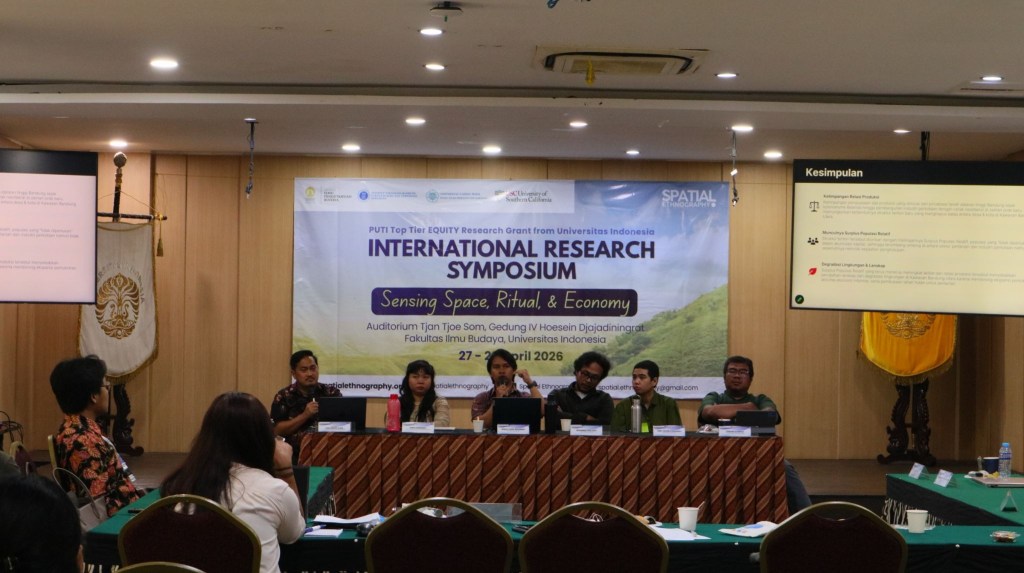
The symposium reached its thematic climax in Panel 6: Representation and Narrative in Space, which interrogated how space is archived and contested. Aniendya Christianna examined New Order-era photographs of Slametan rituals, observing that the act of opening iron trellis doors served as a profound “spatial statement” that intentionally dissolved the boundary between the private home and the public street. This theme of contestation was further explored by Derri Ris Riana in the Meratus Mountains, where state-led conservation plans for a National Park often collide with the ancestral spatial practices of the Dayak Meratus. Riana emphasized that sustainable conservation must integrate indigenous ecological knowledge rather than displacing it.
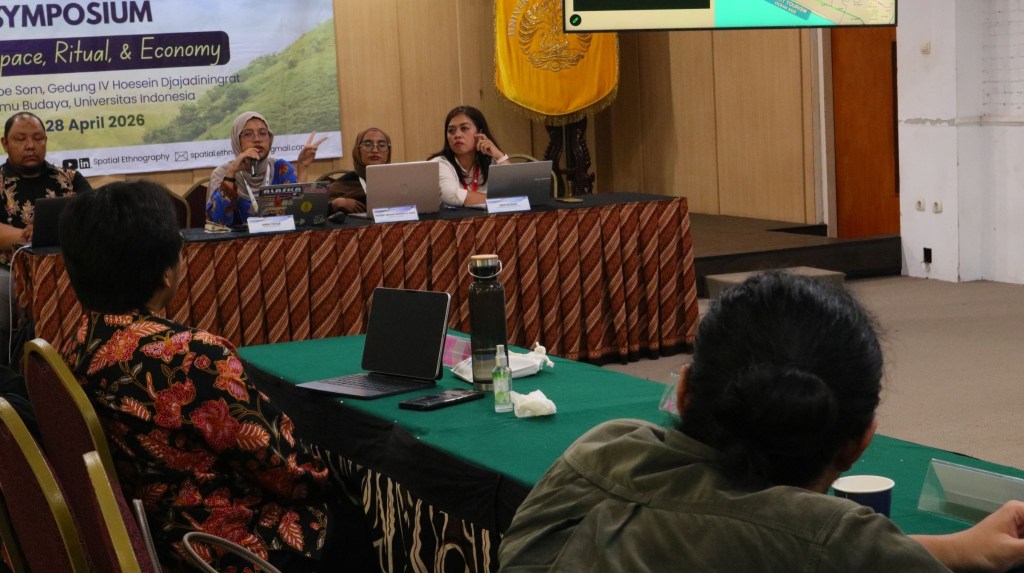
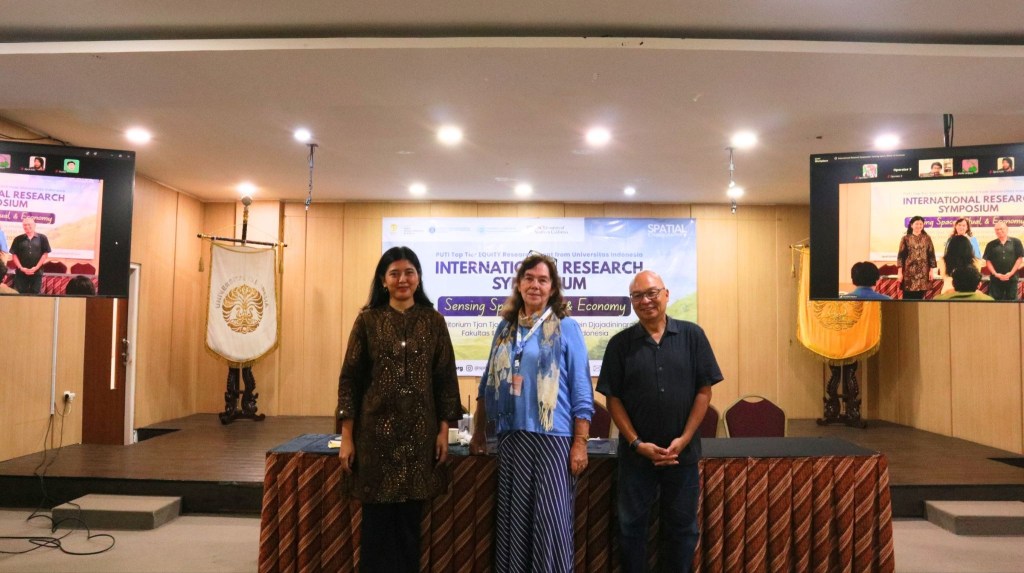
As the lights dimmed in the Auditorium Tjan Tjoe Som, the International Research Symposium 2026 left its participants not with a final map, but with a new set of senses. From the hunger in Sumba to the bass of Sound Horeg, and from the sacred forests of the Meratus to the quiet streets of Trenggalek, the event proved that the most important spaces are those that cannot be pinned down by a surveyor’s tool.
This concludes a two-day shared intellectual journey that did more than just present research; it redefined the very ground we stand on. By dismantling the illusion of “neutral” space and championing the decolonization of methodology, the symposium leaves a lasting mark on the Global South’s academic landscape. As participants depart, they carry with them a renewed commitment to sensing the unseen and voicing the unheard, ensuring that the dialogue between space, ritual, and economy continues long after the final presentation.
Written by: Alisha Andira Danuputri – Media Intern Spatial Ethnography


Leave a Reply