
11 April 2026
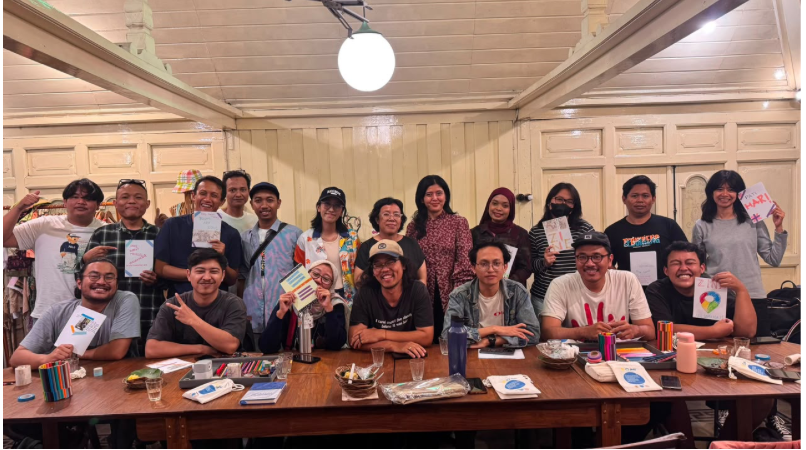
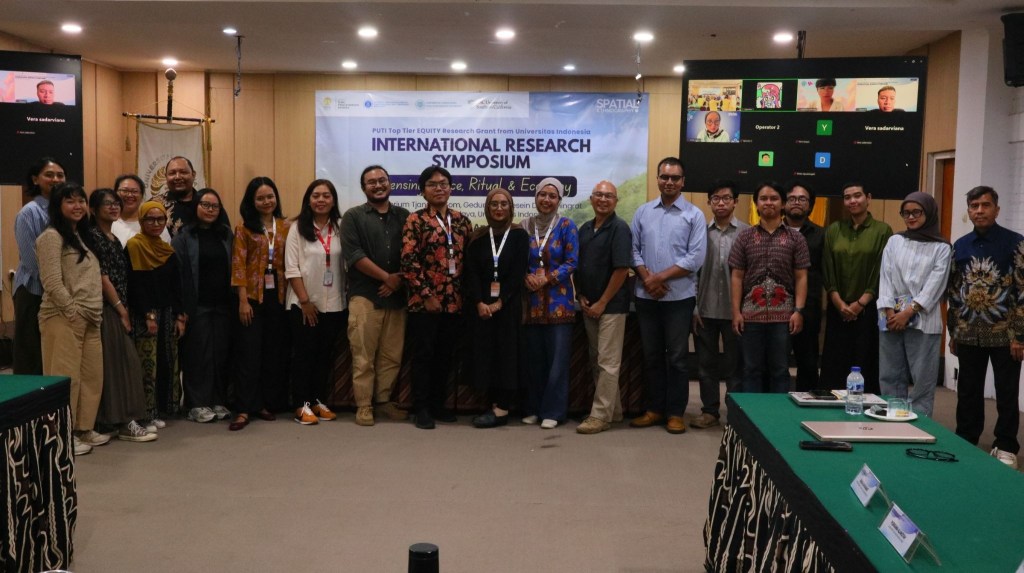
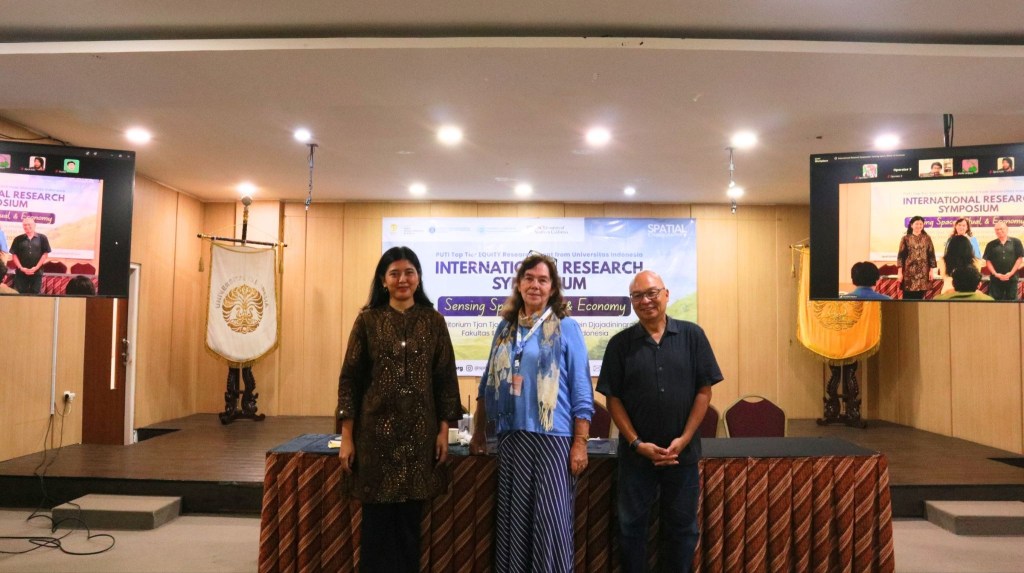
The fourth and final session of the 2026 Spatial Ethnography Mini Course series brought together researchers and practitioners for a rich, multi-disciplinary exploration of ethnographic methods in spatial research. Held under the theme “Data Analysis and Introduction to Spatial Ethnographic Approaches,” the session marked the closing of the 2026 mini course program and offered participants a comprehensive look at how fieldwork data can be collected, analyzed, and spatially interpreted.
The session was moderated by Olga Aurora Nandiswara, S.Ant., M.A. from Universitas Gadjah Mada, whose facilitation kept the discussions grounded and focused throughout.
Dr. Geger Riyanto from Universitas Indonesia opened the session with a presentation titled “Mengalami Bersama Ruang, Berkali-kali: Sebuah Strategi Etnografi Spasial” (Experiencing Space Together, Repeatedly: A Spatial Ethnographic Strategy). He emphasized a foundational principle in spatial ethnographic research: space never carries a single, fixed meaning. Drawing on Lefebvre’s theory of the social production of space, Dr. Geger argued that space is always produced through repeated human encounters. He encouraged researchers to approach their field sites experimentally, returning to the same space in different social contexts and through different methods, such as photovoice, to uncover its layered dimensions. “There is no wrong data,” he noted. “There is only data that emerges from a particular context.”
Dr. Ratri Widyastuti from Institut Teknologi Bandung (ITB) offered a geospatial perspective on spatial analysis, presenting methods for mapping multi-hazard risks and the use of Geographic Information Systems (GIS) as analytical tools. She demonstrated how spatial data can be used to assess and visualize complex relationships between communities and their physical environments, particularly in the context of susceptibility mapping across Java Island.
Dr. Alfita Puspa Handayani, also from Institut Teknologi Bandung, presented on the methods available for mapping spatial transformation of local economies. Her session introduced participants to participatory mapping, remote sensing analysis, and spatial clustering as complementary tools for understanding how economic change becomes visible in space. She stressed that these methods are not merely about capturing geographic coordinates, but about revealing “the hidden dynamics of economic change by making visible the spatial patterns and relationships” that shape everyday lived spaces.
Dr. Abellia Anggi Wardani from Universitas Indonesia grounded the session in ethnographic practice. Drawing on her extensive fieldwork, including research on the role of the Mardika market in Ambon during the post-conflict period, she reflected on the core questions of doing ethnography: What do people do? and What do people think they do when they do what they do? She walked participants through real-world examples of fieldnotes, actor mapping, and data analysis frameworks, illustrating how social space is produced through ritual, economy, and everyday practice.
Following the presentations, participants took part in a closing discussion and task review session, in which speakers provided feedback on participants’ mapping assignments from Session 3. Presenters offered comments and insights on each groups’ work, turning the session into a genuine space for dialogue and critical reflection. This interactive element reinforced the collaborative spirit of the mini course program.
This closing session was a fitting end to the 2026 Spatial Ethnography Mini Course. Across four sessions, participants were guided through a rigorous yet deeply human journey, from foundational theories of space and qualitative methods, to hands-on engagement with spatial tools and ethnographic fieldwork strategies. The fourth session in particular brought everything together, showing how data collected in the field can be read, mapped, and made meaningful.
Participants left the program with more than just methods in hand. They carried with them a richer way of seeing, one that refuses to treat space as a passive backdrop, and instead recognizes it as a living, contested, and socially produced arena where human stories unfold. That, perhaps, is the most valuable takeaway the 2026 Spatial Ethnography Mini Course could offer.
Written by: Alisha Andira Danuputri – Media Intern Spatial Ethnography
 Spatial Ethnography
Leave a comment