28 Maret 2026
The second installment of the Mini Course Series, themed “Social Transformation and the Shifting of Tradition-Based Economic Practices,” was held virtually via Zoom. The event brought together four expert speakers who shared their in-depth research experiences across various regions of Indonesia, particularly Eastern Indonesia. The speakers offered comprehensive perspectives on how social transformation and changes in economic practices cannot be understood in isolation from their spatial context and local traditions.
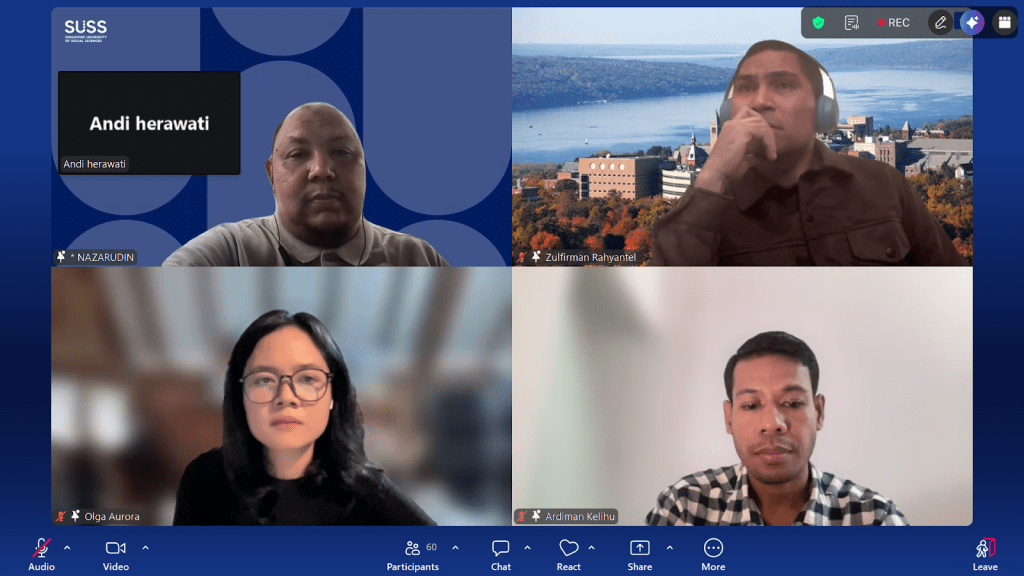
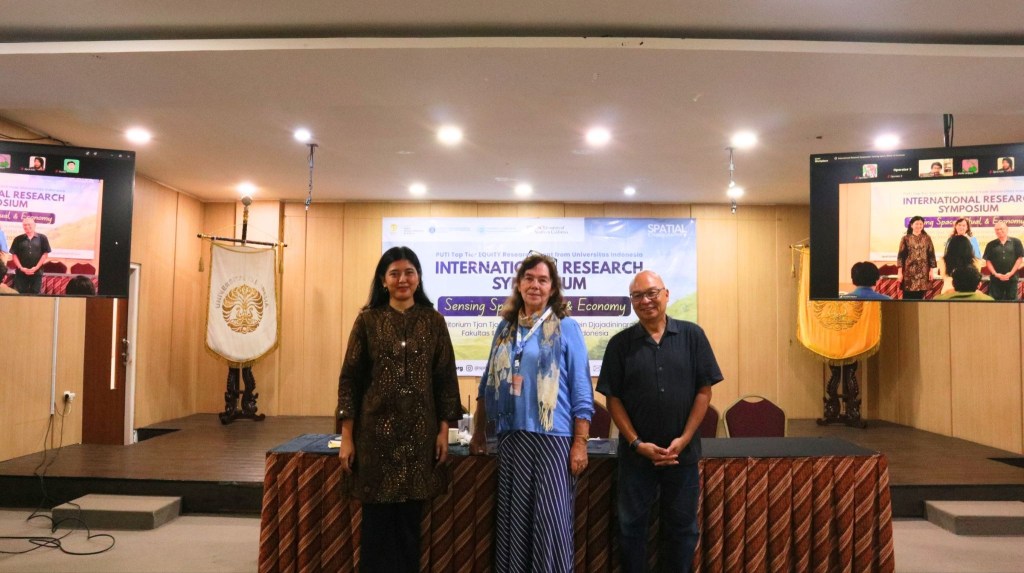
Documentation of the Moderator and Speakers of Mini Course Session 2
This Mini Course featured Dr. I Ngurah Suryawan, who presented an ethnographic reflection on the interior regions of Papua titled “Seemingly Calm, Yet Wild: An Ethnographic Reflection on the Hinterlands of Papua,” examining the contestation between the state’s drive to govern and local communities’ own knowledge in managing their territories. Ardiman Kelihu, M.A. presented his research “Remaking Identity, Political Fragmentation & Clientelism in Eastern Indonesia,” focusing on Central Maluku and analyzing how ethnic identity is spatially constructed and mobilized within the local political landscape. Zulfirman Rahyantel, M.S. introduced his “Follow the Things: People, Space, and Origin Narratives in Governing the Commons” approach, employing ethnographic methods to examine the complex web of relations among village, urban, and global spheres through everyday economic practices. Meanwhile, Olga Aurora Nandiswara, S.Ant., M.A. presented “The Reproduction of Food (Exchange) Mode: Sowing the Sovereignty of Life in (South) West Sumba,” analyzing the transformation of traditional food exchange practices and economic modernization in Southwest Sumba.
Dr. I Ngurah Suryawan underscored the importance of women’s perspectives in studies of space and natural resource exploitation, analyzing gender-based knowledge, rights over natural resources, and grassroots environmental movements. His research in frontier regions such as Papua and Maluku highlights the crucial role of women in spatial regulation and feminist ecological knowledge.
Ardiman Kelihu employed intensive fieldwork methods including in-depth interviews and observation of political elites during regional head elections to understand the relational construction of ethnic identity. His findings reveal that ethnicity is ultimately intertwined with spatial dynamics and the strategies of political actors, giving rise to political fragmentation.
Zulfirman Rahyantel applied an ethnographic approach that traces actors, processes, and economic practices within micro, meso, and macro relational contexts. His research draws on event ethnography and marine ethnography to situate global conservation within local realities across the small islands of Maluku and Indonesia more broadly.
Olga Aurora Nandiswara, for her part, analyzed socioeconomic transformation through the lens of local calendars, customary ceremonies, and agrarian change in Southwest Sumba, illuminating how communities adapt to modernization through economic diversification and exchange practices that weave together the traditional and the modern.
The speakers consistently emphasized the importance of researcher positionality, building meaningful relationships with communities, and practicing knowledge co-production as an integral part of ethical and impactful ethnographic research. The event aimed to bridge academic scholarship and local community knowledge in order to foster a more comprehensive understanding of social transformation. Across all the research presented, a common thread emerged: social life is always shaped through the complex interplay of spatiality, history, and power, meaning that ethnography does not merely document cultural narratives, but also lays bare the processes of social change and the inequalities embedded within society.
Mini Course Session 2 demonstrated that a deep understanding of social transformation and shifting economic practices demands a holistic approach, one that integrates multiple disciplinary perspectives and engages local communities as genuine knowledge partners in the process of research and social analysis.
Written by: Zhilfa Mutiara Azizah – Media Intern Spatial Ethnography


Leave a Reply